C.KRISHNASWAMY CONTINUIVERSE
08 August 2026 – 18 September 2026
11:00 AM - 19:00PM
Ashvita's Campus
About
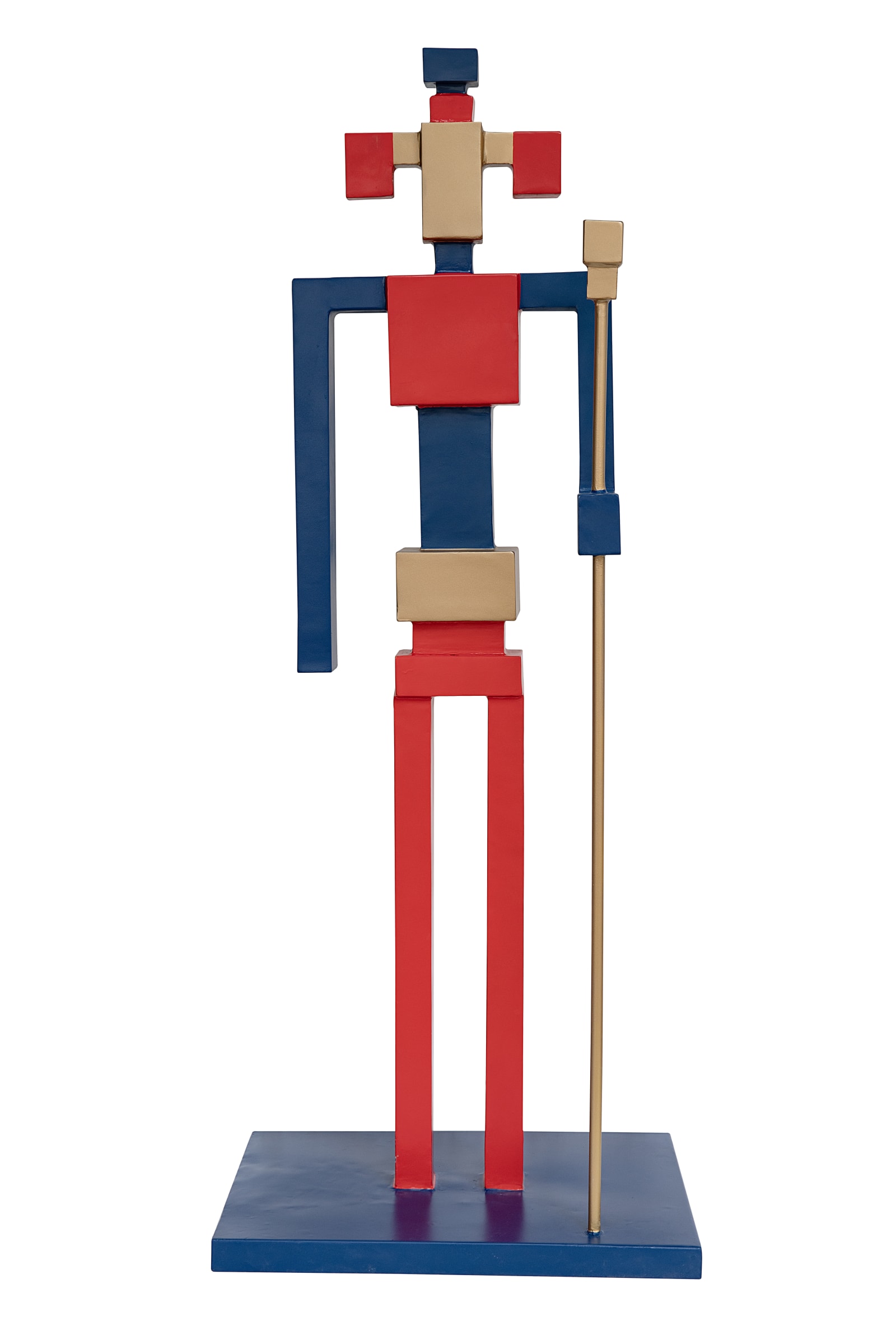
Krishnaswamy's exhibition explores ecological memory, primordial consciousness, and the continuity of existence across time. His work draws on the Ayyanar tradition of southern India, not as a religious practice, but as a primordial human expression of guardianship, rooted in the relationship between land, community, and unseen forces. Through this lens, the sculptures examine how ancient presences continue to inhabit contemporary life, wherever in the world that life is lived. The works emerge from a landscape tradition in which protection, memory, and ecology were inseparable. In the Ayyanar shrines of Tamil Nadu, village boundaries became sites of ritual, remembrance, and collective responsibility. Clay was shaped into monumental horse and guardian figures, placed at the edges of settlements to watch over their communities. Earth became a protector. The guardian was never separate from the terrain it inhabited; it emerged from the same soil, sharing its material and symbolic existence. Many of these relationships are now undergoing profound transformation, a condition shared by communities worldwide as agricultural and sacred landscapes give way to urban expansion. Rivers are reduced to infrastructure, fields become corridors of development, and the ties that once bound people to place grow fragmented, even as the physical landscape often remains. The urgency of Krishnaswamy's work is drawn from this context. He reimagines the monumental guardian figures as embodiments of resilience, ecological intelligence, and continuity, rather than replicating them as religious icons. The sculptures ask whether something fundamental persists once form dissolves, whether inherited understandings of coexistence can endure as villages and rituals are irrevocably altered. The works employ a contemporary material vocabulary, cement, brick, metal, stone, fiberglass, and electric light, to translate these inherited ideas into a global, present-day visual language, exploring the presence of the guardian within landscapes shaped by urbanization, migration, and memory. At the core of the work lies a belief that all forms are temporary manifestations of a deeper continuity. Human beings, landscapes, objects, and living organisms emerge, transform, and vanish, yet the relationships that bind them endure. Krishnaswamy suggests that continuity resides not in fixed objects, but in the enduring relationships between land, memory, consciousness, and material life, inviting viewers to reconsider what remains after transformation.
Edition
Contemporary Now Edition 3Date
Saturday, 8 August 2026 – Friday, 18 September 2026
Time
11:00 AM - 19:00PM
Venue
Ashvita's Campus