Past Edition
Contemporary Now Edition I
30 August 2025 – 17 September 2025
Chennai · Lalit Kala Akademi, Chennai.
Introduction
For the first time, Chennai will witness a collaborative exhibition of unprecedented scale as five of India’s most influential galleries
Exhibition Description
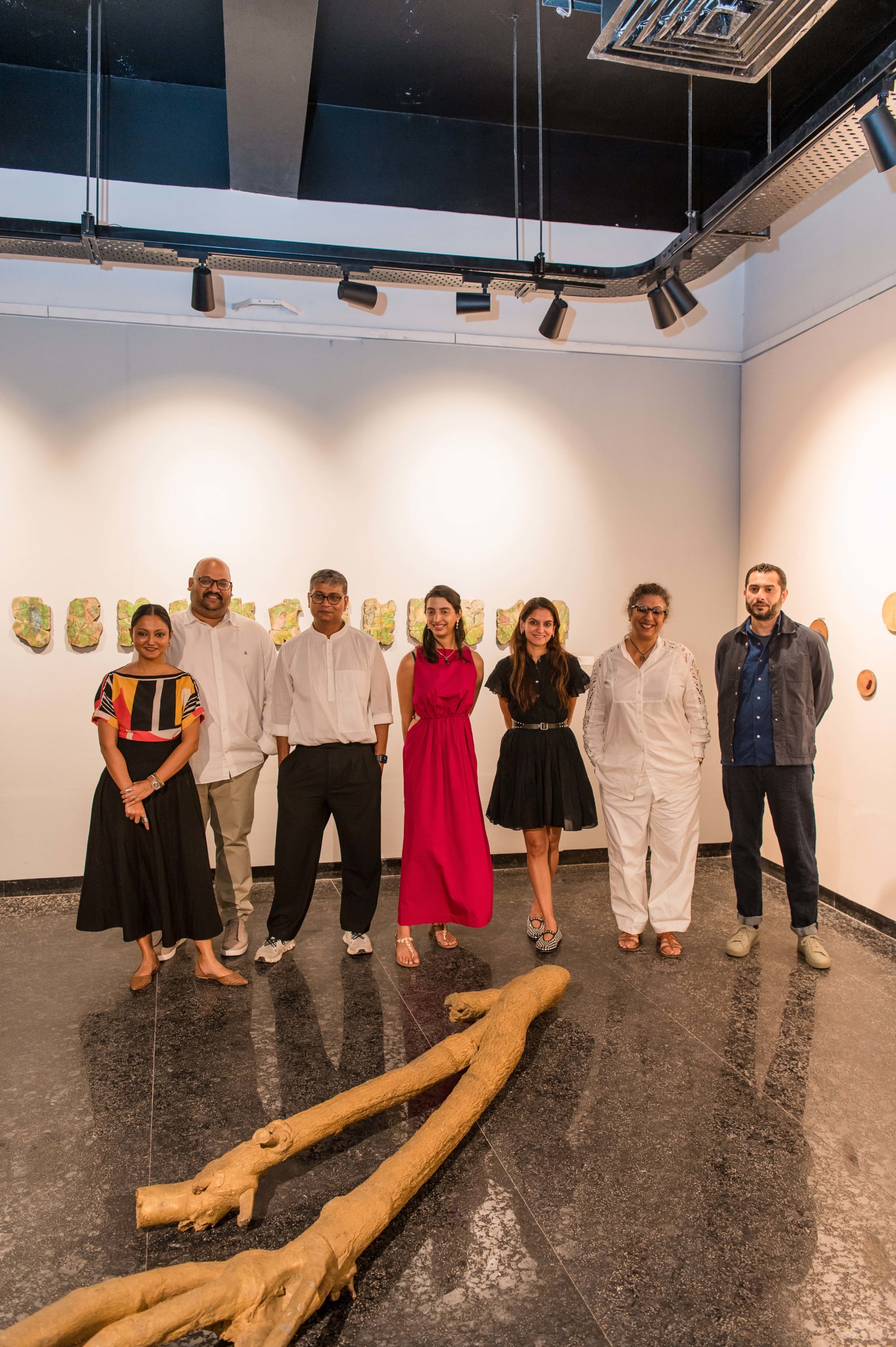
For the first time, Chennai will witness a collaborative exhibition of unprecedented scale as five of India’s most influential galleries — Chemould Prescott Road, Vadehra Art Gallery, Chatterjee & Lal, Experimenter, and Ashvita’s — come together to present Contemporary Now. Featuring thirty-seven of the country’s most compelling artists, the exhibition is a panoramic introduction to the dialogues shaping Indian art today.
Curatorial Note
For the first time, Chennai will witness the coming together of five of India’s most influential galleries — Chemould Prescott Road,Vadehra Art Gallery, Chatterjee & Lal, Experimenter, and Ashvita’s —to present a landmark survey of contemporary art in the country. Contemporary Now is both a window and a mirror: a panoramic view of the dialogues shaping Indian art today, and a reflection of how these conversations resonate with the city’s own cultural sensibilities. Each gallery brings a distinct curatorial vision, shaped by its program, history, and way of seeing. Encountered side by side, these perspectives reveal the breadth of thought and practice at work in India today. Curated across five galleries, the exhibition features thirty-seven artists working in painting, sculpture,photography, performance, textiles, installation, and hybrid forms.They come from across the country — from Kashmir to Kerala, Goa to Bengal — yet share a common urgency: to respond to the complexities of our present moment. Some revisit tradition to reimagine it, drawing from miniature painting, mural art, or indigenous craft, placing heritage forms into contemporary political and social contexts. Others look to the body as a site of memory and identity, engaging with questions of gender, sexuality, migration, and belonging. Many confront environmental realities, mapping ecological change, urban growth,and shifting relationships between people and landscape. Across the exhibition, radical experimentation with material and form expands the possibilities of how art can be made, experienced, and understood. One of the defining features of contemporary art today — and of this exhibition — is the absence of the historical, institution-based groupings that once connected artists. In the modern era, identifiable movements and cohorts emerged: the Bengal School, the Bombay Progressives, the Madras Moderns, the Cholamandal artists. In contrast, the contemporary space is marked by diversity of background and training. While some studied in Baroda or major art schools, many trained in regional colleges or internationally. Today’s artists are less bound by shared alma maters or pedagogical traditions; their practices emerge from personal expression, individual research, and unique life experiences. Each is,in a sense, their own “ism” — working within an individualized creative silo rather than a movement. For audiences, this means approaching each artwork as a distinct statement, understood in the context of the present moment rather than through the lens of a fixed art-historical grouping. The term Contemporary Now speaks to this — art defined by the time and place in which it is made, and by the diversity of voices shaping it. Beyond introducing new ways of seeing, Contemporary Now invites collectors to connect with what is shaping Indian art today. Here is a thoughtful, filtered selection — works to engage with intellectually and emotionally, and to bring into one’s collection, making these conversations part of a lasting, lived experience.